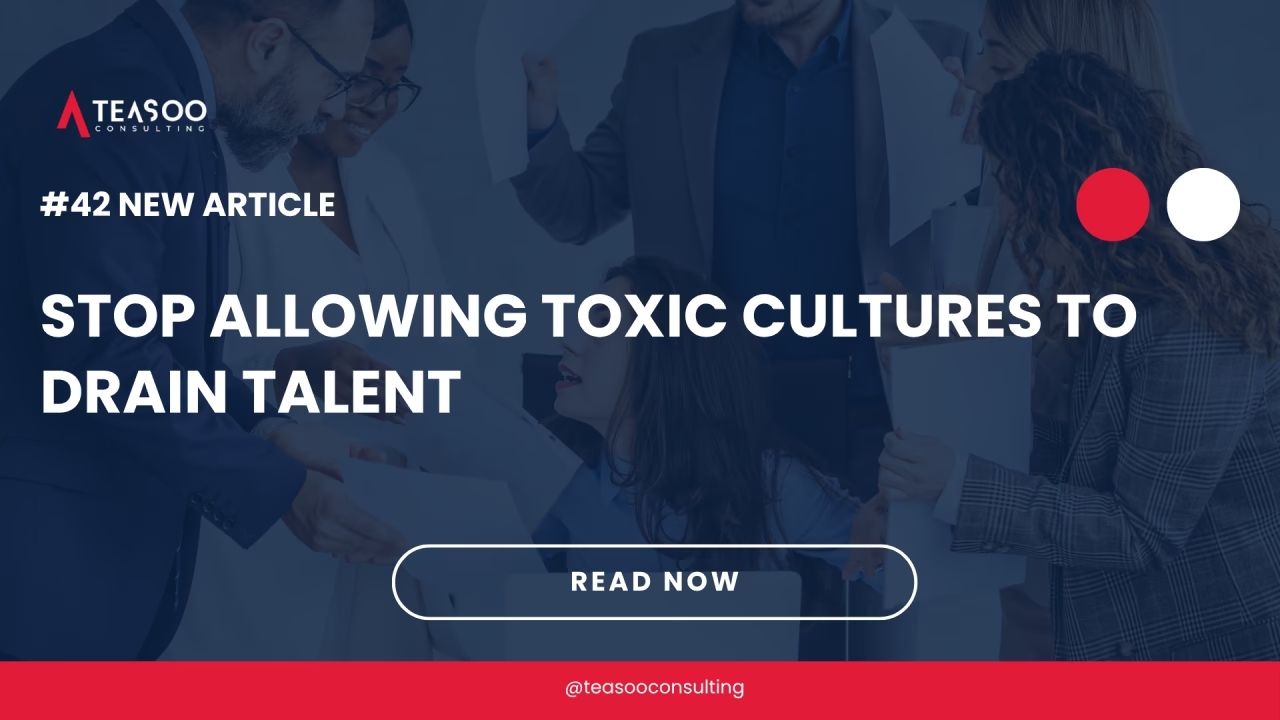
The modern boardroom is currently obsessed with three letters: ESG. We analyze Carbon Footprints (Environmental) with surgical precision and audit supply chains (Governance) to satisfy international stakeholders. Yet, the middle child—the “Social”—is frequently treated as a mere footnote of corporate philanthropy or “CSR” photo-ops.
It is time for a radical intellectual pivot. In the context of a sustainable business, “Social” isn’t just about the community outside your gates; it starts with the human beings inside your office. If your organization is a revolving door for high-performers, you aren’t just facing an HR hurdle—you are failing your ESG mandate.
The Invisible Leak: High Turnover as a Hidden Cost
In many Nigerian corporate circles, high turnover is often dismissed as “the nature of the market” or a lack of loyalty among Gen Z and Millennials. This is a costly delusion.
Intellectually, we must view talent as appreciating capital. When a seasoned employee leaves, they don’t just take their laptop; they take institutional memory, client trust, and the “silent” efficiency that keeps a department running. The cost to replace a mid-level manager is estimated to be 1.5 to 2 times their annual salary when you factor in recruitment, onboarding, and the “productivity lag” of a new hire.
A toxic culture is essentially a tax on your P&L. It is a leak in your balance sheet that no amount of aggressive marketing can plug.
Diagnosing the Toxicity: The Intellectual Audit
A toxic culture does not always look like shouting in the hallways. Often, it is quieter and more systemic. To fix it, leadership must move beyond “vibe checks” and utilize hard metrics:
- The “Stay Interview” vs. The Exit Interview: By the time an employee is sitting in an exit interview, the data is reactive. Intellectual leadership utilizes Stay Interviews—asking your top 20% of talent, “Why do you stay, and what would make you leave tomorrow?”
- Glassdoor and Internal Sentiment Mapping: Ignoring public feedback is a governance failure. Analyzing patterns in reviews often reveals “Middle Management Bottlenecks”—where great company values are weaponized or ignored by local supervisors.
- The eNPS (Employee Net Promoter Score): Ask one question: “On a scale of 1–10, how likely are you to recommend this company as a place of work to a friend?” If your score is low, your “Social” pillar is crumbling.
Fixing the Culture: Beyond the “Fun” Office
To move the needle on retention, we must stop substituting “perks” (like Friday drinks or office football) for psychological safety. A sweet, intellectually vibrant culture is built on three pillars:
- Radical Transparency: Talent drains away when decisions feel arbitrary. Whether it is a promotion path or a shift in company strategy, clear communication treats employees as stakeholders, not just “staff.”
- Empathetic Accountability: High performers want to be held to high standards, but they refuse to be belittled. A culture that balances rigorous KPIs with a genuine “human-first” approach to personal crises or mental health will always out-compete a “pressure-cooker” environment.
- The Growth Guarantee: In the Nigerian job market, the most ambitious talent stays where they feel they are becoming “more.” If your culture doesn’t offer a visible trajectory of skill acquisition, your best people will view you as a stepping stone rather than a destination.
The Competitive Edge
The talent war in Nigeria is no longer local; it is global. With the rise of remote work and international “brain drain,” your competitors are no longer just the firm down the street—they are companies in London, Berlin, and New York.
If your culture is toxic, you are essentially training your best people for your competitors to hire. You are paying for their growth, only for someone else to reap the dividends of their expertise.
Final Thoughts: The Leadership Mandate
True leadership is the realization that culture is the product. If you build a healthy, intellectually stimulating, and supportive social ecosystem within your firm, the “work” takes care of itself.
ESG is not a checklist for the annual report; it is a commitment to the people who make your business possible. Stop the drain. Measure the toxicity. Fix the “Social.” Because at the end of the day, your best talent is not looking for a job—they are looking for a place where they can flourish.