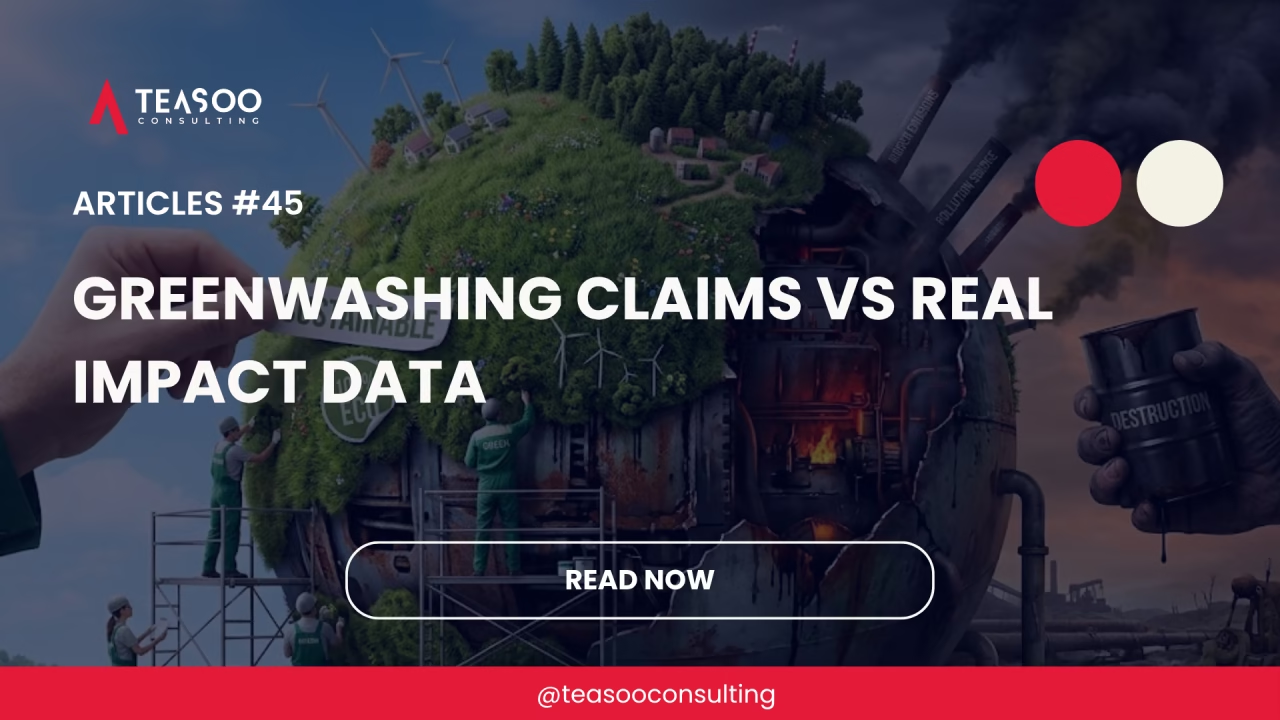
In 2027, “feeling green” isn’t enough, you need the data to back it up. We look at why Nigerian companies must avoid the greenwashing trap and how to move toward data-backed impact stories.
There is a quiet crisis unfolding across Nigerian boardrooms and annual reports. Companies are painting their operations green, recycling logos, vague net-zero pledges, and carefully worded sustainability commitments without a single verifiable data point to support the claim.
This is greenwashing. And in 2027, it is no longer just an ethical failure. It is a business risk.
What Greenwashing Actually Looks Like
Greenwashing rarely announces itself. It shows up in subtle ways:
- A company claims to be “committed to reducing carbon emissions” with no baseline figure, no timeline, and no reporting mechanism
- A sustainability report runs 40 pages but contains zero quantified environmental KPIs
- A press release announces a tree-planting initiative without disclosing how many trees survived beyond six months
Nigerian companies, particularly in manufacturing, FMCG, financial services, and oil and gas, are not immune to these patterns. The absence of a strong domestic ESG disclosure framework has, until recently, made it easier to perform sustainability rather than practice it. That window is closing.
The SEC Nigeria and the Nigerian Exchange (NGX) ESG Disclosure Guidelines now expect listed companies to move from narrative commitments to structured, measurable reporting. Internationally, foreign portfolio investors are applying ESG screens to Nigerian equities, and export markets, particularly Europe, are tightening supply chain sustainability requirements. For Nigerian companies seeking capital or market access beyond our borders, greenwashing is not a shortcut. It is a dead end.
The Real Cost of Vague Claims
When a company’s sustainability claims cannot be substantiated, the credibility gap extends beyond ESG. Investors and partners begin to question the quality of all reported data. Companies that cannot produce verified ESG figures are being structurally excluded from green bonds, sustainability-linked loans, and development finance instruments — capital that is growing in relevance in Nigeria’s market right now.
There is also an internal cost. When leadership communicates a sustainability ambition that doesn’t match operational reality, employees become cynical and actual improvement stalls. And as disclosure standards harden into regulation, companies that have historically overstated their ESG credentials face retroactive legal scrutiny. What was once a soft reputational risk is becoming a hard compliance risk.
What Data-Backed Impact Actually Requires
Moving from greenwashing to genuine ESG impact is not about perfection. It is about honesty, structure, and improvement over time.
Set a baseline and publish it. You cannot track progress without a starting point. Greenhouse gas emissions, water consumption, waste generation — document them, even if the numbers are unflattering.
Attach dates to every commitment. “We will reduce energy intensity by 30% by 2030 against a 2023 baseline” is a commitment. “We are committed to a greener future” is a press release. The difference is auditable accountability.
Use a recognised framework. GRI, SASB, and TCFD exist to help companies structure credible reporting. Adopting one is not bureaucracy — it is credibility infrastructure.
Report on what didn’t work. Companies that only report successes invite scepticism. Companies that report transparently — including failures and recalibrated goals — build trust.
Nigerian companies that build robust ESG data infrastructure now are positioning themselves ahead of an inevitable tide. The companies that will attract the next generation of capital will be those that can tell a coherent, evidence-based impact story — not one built on aspirational language, but one grounded in data and honest progress reporting.
Ask yourself: if a sophisticated investor requested your ESG data tomorrow, what would you hand them? If the honest answer is a brochure, it is time to build something better.
At Teasoo Consulting, this is exactly what we do. We help organisations move beyond sustainability theatre, curating their impact stories with rigour, turning ESG strategy into execution, and building the evidence base that makes those stories credible to investors, regulators, and partners alike. Whether you are starting from scratch or strengthening an existing framework, we work with you to close the gap between what your organisation aspires to and what it can prove.
If your organisation is ready to move from intention to impact, let’s talk.