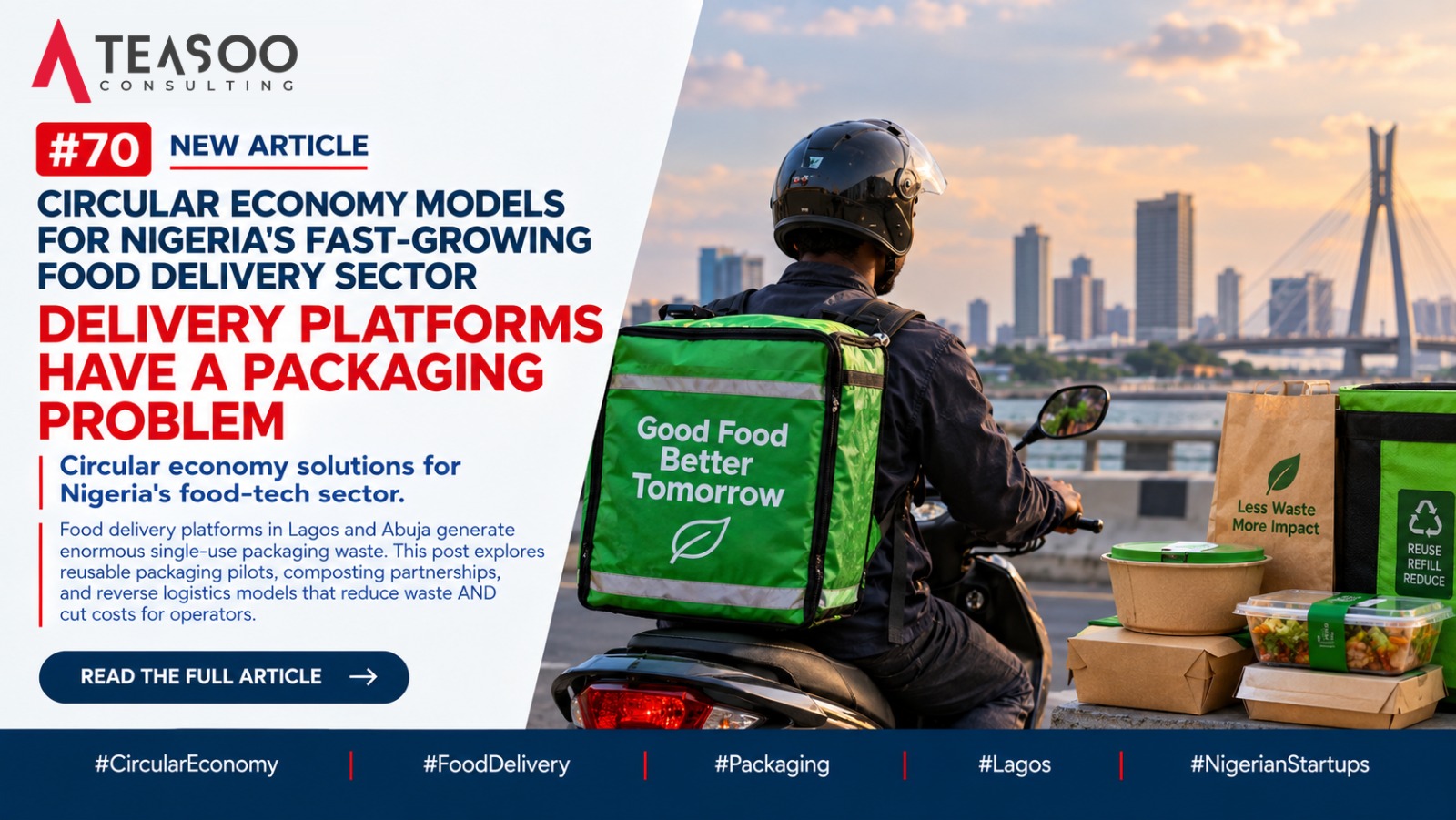
Delivery Platforms Have a Packaging Problem
Food delivery has changed how millions of Nigerians eat, work and run businesses. In Lagos and Abuja, a few taps bring hot food to your door in under an hour.
But behind that convenience is a growing waste problem: foam packs, plastic bowls, nylon bags and cutlery used for minutes and discarded for years.
Nigeria’s food delivery sector does not have to choose between growth and sustainability. Circular thinking, built in from the start, can cut waste, build customer loyalty and lower costs.
The hidden cost of convenience
Every order creates a packaging journey: from kitchen to rider’s bag to customer, then to a bin, gutter or dumpsite. For operators, it is also a recurring cost paid on every single order.
The rules are changing too. Lagos began full enforcement of its Styrofoam and single-use plastics ban in July 2025, with outlets selling banned items at risk of being sealed. (Channels TV) Nationally, Extended Producer Responsibility (EPR) makes companies responsible for the packaging they put on the market. (Voice of Nigeria)
The circular economy offers a different approach: keep materials in use through reuse, recycling and recovery, so packaging does not simply disappear after one order.
Make returning packaging worthwhile
The most practical lever is incentives. People return or recycle packaging when doing so is easy and rewarding.
Foodpanda Hong Kong offers a useful example. In a pilot with WWF-Hong Kong, customers paid a HK$15 refundable deposit for a reusable container. On return, they got the deposit back, a HK$15 coupon for their next order and reward points through Carbon Wallet. (Plastic Free China / Break Free From Plastic) The pilot ran with about 40 restaurants and ended in September 2023, but its design is instructive. It combined:
- A refundable deposit, giving the container clear value.
- A loyalty reward, bringing customers back to order again.
India’s Zomato shows the recycling side. It made “no cutlery” the app default, funds the recycling of at least as much plastic as its deliveries use, and promotes restaurants that switch to plastic-free packaging. (Packaging Speaks Green)
Nigeria already has building blocks. Lagos-based RecyclePoints rewards households with points for bottles, cans and sachets, redeemable for goods or cash. (Climate Action Africa) A delivery platform could link to models like this through wallet credits, delivery discounts or loyalty points.
The goal is to make the circular choice the easier, more rewarding one.
Build reverse logistics into the model
Reuse only works if containers come back. Delivery platforms already have the riders, routes and apps to make that happen. From February 2023, Foodpanda customers could hand empties to the rider on their next order, and Lieferando offers a similar option in Germany. (Vytal)
A practical Nigerian model could include:
- QR-tagged containers and a small refundable deposit at checkout.
- Returns on the next delivery or at partner drop-off points.
- Central washing hubs and in-app rewards for regular returners.
Packaging stops being a disposable expense and becomes an asset that circulates.
Partner beyond the platform
No platform needs to do this alone. Recyclers can process damaged containers. Brands with EPR obligations, many of them in the Food and Beverage Recycling Alliance (FBRA), need collection volumes that platforms can supply. Composting partners can turn kitchen food waste into inputs for urban farms.
Start small, then scale
There is no need for a nationwide rollout on day one. A pilot in one Lagos neighbourhood, Abuja business district or university campus could test deposit uptake, container losses, washing costs, rider efficiency and repeat orders. That data shows what works and gives operators evidence to win partners and investors.
Build it into business development from the start: packaging standards in vendor onboarding, “no cutlery” as the app default, return trips in rider planning, and packaging tracked per order for ESG reporting.
The opportunity for Nigerian food-tech
Nigeria’s food delivery sector is still young, and that is an advantage. Platforms can embed circular design before single-use habits harden further.
The real question is whether operators treat sustainability as a compliance burden or as a source of innovation, loyalty and competitive edge. Done well, circular packaging is good business.
At Teasoo Consulting, we help businesses turn that idea into practice, from ESG strategy and compliance to circular models that make commercial sense. Ready to rethink packaging? Let’s talk.
What would make you return a reusable delivery container: a deposit refund, a discount, or loyalty points?
#CircularEconomy #FoodDelivery #Packaging #Lagos #NigerianStartups