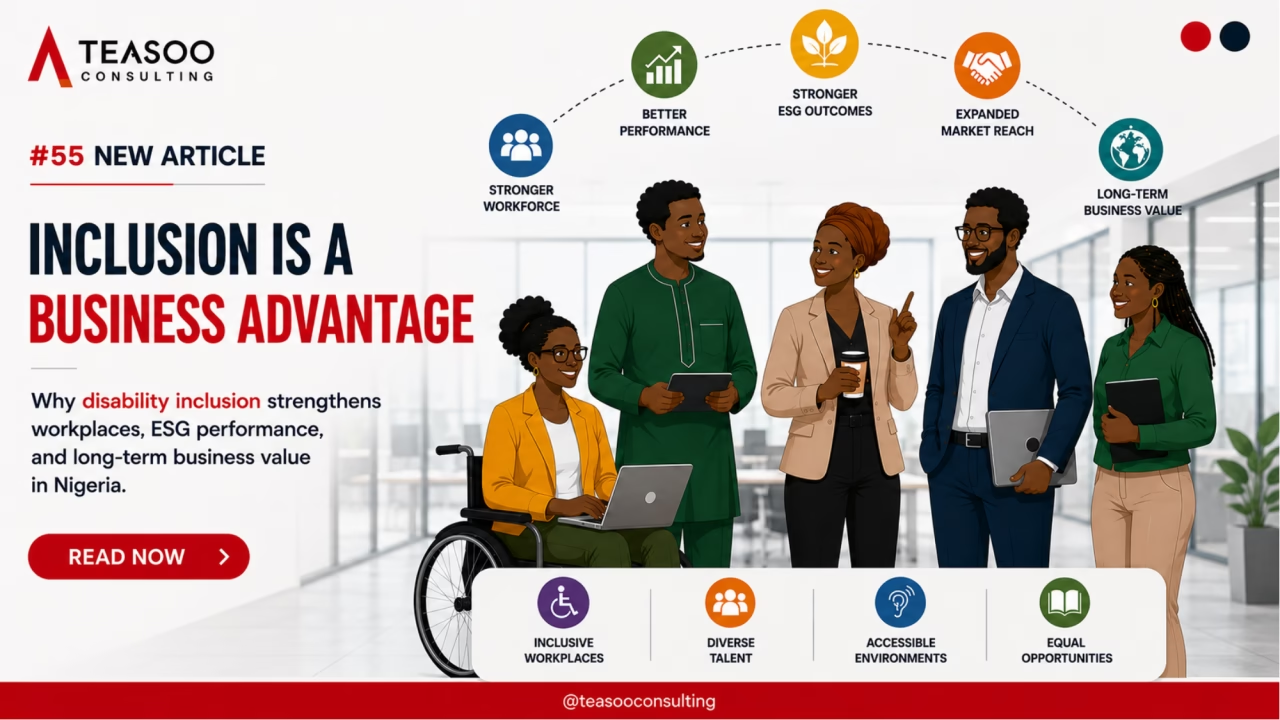
Most conversations about hiring people with disabilities in Nigeria begin with the law: quotas, compliance deadlines, and penalties. While these matter, they overlook a much bigger opportunity. Disability inclusion is not just a legal obligation; it is a business strategy, one that moves through five compounding stages: a stronger workforce, better performance, stronger ESG outcomes, expanded market reach, and long-term resilience.
Nigeria already has the legal framework. The Discrimination Against Persons with Disabilities (Prohibition) Act 2018 establishes a 5% employment quota for the public sector, while Lagos State requires private organizations with more than 100 employees to reserve at least 1% of jobs for persons with disabilities (PWDs). With the Federal Government reinforcing enforcement through the National Commission for Persons with Disabilities (NCPWD), businesses should view compliance as the baseline, not the end goal.
Stronger Workforce, Better Performance
Hiring people with disabilities gives employers access to a skilled talent pool that is often overlooked. Accenture’s research shows companies that lead on disability inclusion consistently outperform others in their industry financially. In 2018, these companies had 28% higher revenue and double the net income of non-leading peers; by 2023, that gap had grown to 1.6 times more revenue and 2.6 times more net income (Accenture, Getting to Equal: The Disability Inclusion Advantage, 2018 and 2023). Inclusive workplaces also tend to experience stronger employee engagement and retention, reducing recruitment and turnover costs over time. That’s the first link in the chain: a stronger workforce translates directly into better operational performance.
Stronger ESG Outcomes
For ESG and sustainability leaders, disability inclusion strengthens the “Social” pillar with measurable indicators: workforce representation, accessibility improvements, leadership accountability, and inclusive recruitment practices. It’s one of the few social metrics that produces a hard number rather than a narrative.
For many organizations, the challenge isn’t understanding why disability inclusion matters, but how to implement it effectively. This is where ESG advisory becomes critical. At Teasoo Consulting, we work with organizations to embed inclusion into ESG strategies, governance frameworks, and sustainability reporting, helping businesses move beyond compliance to create measurable business and social value.
Expanded Market Reach
The business opportunity extends well beyond talent. More than 1.6 billion people globally live with a disability, representing a consumer market with an estimated US$18.3 trillion in combined annual spending power (people with disabilities and their families), according to the Return on Disability Group’s Global Economics of Disability report (2024). Companies that build accessible workplaces are typically better equipped to design products and services that meet the needs of this significant market, which expands reach on both the talent and customer side at once.
A Nigerian Example Worth Following
One of the strongest local examples comes from MTN Nigeria. Through its Beyond Barriers initiative, the company increased the representation of employees with disabilities from 0.9% to 2.13%. That figure can look small in isolation, but it reads differently against the backdrop of Nigeria’s broader labour market, where only about 36.7% of people with disabilities participate in formal employment, compared to 80% of people without disabilities. Closing even a fraction of that gap takes deliberate structural change, which is exactly why MTN’s growth matters more than the raw number suggests.
What makes MTN’s approach noteworthy is that disability inclusion was not treated as a corporate social responsibility programme; it became a governance priority. The company conducted accessibility audits, upgraded facilities, improved digital accessibility, and embedded inclusion into board-level oversight. By treating accessibility as business infrastructure rather than philanthropy, MTN created measurable outcomes that strengthened both governance and workforce inclusion.
MTN is also a member of the Nigeria Business Disability Network (NBDN), alongside organizations such as Unilever, Airtel, and Diageo. This growing network demonstrates that disability inclusion is becoming a strategic business priority across sectors, with companies sharing practical tools and lessons on inclusive employment and supply chains.
Inclusion Doesn’t Have to Be Expensive
One of the biggest misconceptions is that employing people with disabilities requires major investment. U.S. data from the Job Accommodation Network shows nearly half of workplace accommodations cost nothing, and where there is a cost, the median is just $300 (JAN, Workplace Accommodations: Low Cost, High Impact, updated 2025). Common examples include:
- Accessible recruitment and interview processes.
- Flexible work arrangements.
- Assistive software and technologies.
- Accessible digital documents and communication.
- Minor workplace modifications.
These improvements often benefit the wider workforce and improve the experience for customers as well.
Where Employers Can Start
Organizations do not need to reinvent the wheel. Practical first steps include:
- Conduct accessibility audits to identify physical and digital barriers.
- Make disability inclusion a board-level responsibility rather than solely an HR or CSR initiative.
- Collect and monitor disability workforce data to inform decision-making.
- Review recruitment processes to remove barriers and reduce unconscious bias.
- Invest in ICT and digital skills development to widen the pool of qualified candidates.
- Join peer networks such as the NBDN to learn from organizations already advancing disability inclusion.
Employers looking for practical labour market insights can also explore the work of Inclusion Works Nigeria, which has identified data gaps and accessibility barriers that continue to limit employment opportunities for many PWDs.
Long-Term Resilience: The Competitive Advantage
The International Labour Organization estimates that excluding people with disabilities costs low- and middle-income countries between 3% and 7% of GDP through lost productivity (ILO, Disability and Work, 2024). Businesses that don’t recruit and support people with disabilities aren’t just limiting access to talent; they’re overlooking a growing customer base and missing opportunities for innovation.
The legal framework for hiring people with disabilities in Nigeria is already in place, and leading employers have shown inclusive hiring is both practical and commercially valuable. The real question is whether organizations will keep treating disability inclusion as a compliance exercise or recognize it as a source of competitive advantage.
At Teasoo Consulting, we believe organizations that lead on inclusion today will create the most lasting business value tomorrow. Disability inclusion is no longer just an HR or compliance matter; it’s a strategic investment in resilience, innovation, and growth.
DisabilityInclusion #DEI #HRNigeria #SocialESG #WorkforceInclusion #TeasooConsulting #YourPartnerForSuccess