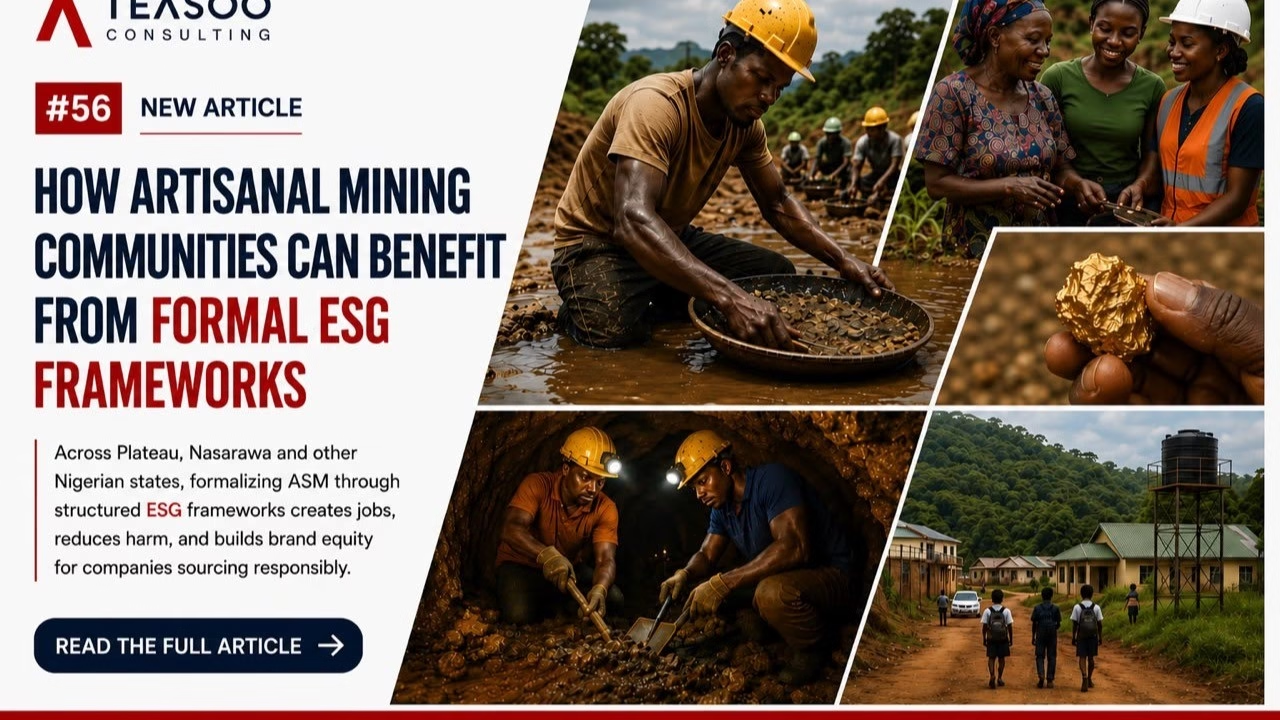
Across Plateau, Nasarawa and several other Nigerian states, artisanal and small-scale mining (ASM) is a primary source of household income. According to Delve, the global ASM data platform, an estimated 500,000 people work in the sector directly in Nigeria, with millions more depending on it indirectly. Yet most of this activity happens with zero formal environmental oversight. Here’s how bringing ASM communities into structured ESG frameworks creates jobs, reduces harm, and builds brand equity for companies sourcing from them.
For many communities, ASM is more than an occupation; it is the primary source of household income. But operating outside formal governance systems has left the sector associated with unsafe working conditions, environmental degradation, child labour, limited access to finance, and persistent community conflict.
The solution is not to eliminate artisanal mining. It is to formalize the sector through structured Environmental, Social, and Governance (ESG) frameworks that protect people, strengthen communities, and create long-term value for businesses.
When governments, mining companies, financial institutions, and development organizations work together to integrate ASM into responsible mining systems, the benefits extend far beyond regulatory compliance.
Economic Benefits and Financial Inclusion
Formal ESG frameworks improve the economic prospects of artisanal miners by integrating them into legitimate domestic and international mineral value chains.
Nigeria’s Presidential Artisanal Gold Mining Development Initiative (PAGMI) is proof that formalization works. Launched in 2019 across pilot states including Kebbi and Osun, it enrolled over 11,500 artisanal and small-scale miners within four years, according to Nigeria’s Solid Minerals Development Fund, moving them off informal buyers and onto official gold-purchase channels at market-rate pricing.
Formalization also improves access to finance. Licensed miners with recognized operating rights are better positioned to secure loans, invest in safer equipment, and improve productivity. Many ESG programs further support miners through technical assistance and capacity-building initiatives that prepare them to meet international responsible sourcing requirements.
Beyond individual livelihoods, formal mining programs stimulate local economies by creating employment throughout the mining value chain, from extraction and processing to logistics and environmental monitoring.
Environmental Stewardship and Public Health
Perhaps the greatest opportunity ESG presents is reducing the environmental and public health impacts historically associated with informal mining.
The stakes are well documented. Nigerian government figures cited in the PAGMI program record more than 7,000 cases of lead poisoning and roughly 700 deaths linked to unregulated artisanal gold mining in Zamfara and Kebbi States between 2010 and 2016, one of the worst mining-related public health crises in Nigeria’s history, driven largely by unsafe ore-processing methods. Responsible mining practices, built around proper handling of mercury and lead, are designed to prevent exactly this kind of outcome.
Structured ESG programs also require environmental management plans before mining begins: erosion control, waste management, water protection, biodiversity conservation, and land rehabilitation strategies that ensure mining sites can be restored for future productive use.
Worker safety improves considerably too, through Personal Protective Equipment (PPE), safety training, and improved mining techniques designed to reduce accidents and fatalities.
Social Empowerment and Community Development
Effective ESG frameworks recognize that sustainable mining must generate value for host communities, not just mineral output.
Community Development Agreements (CDAs) give mining operators a formal mechanism to commit to local priorities, schools, healthcare facilities, clean water systems, sanitation infrastructure, and road development, before operations even begin.
Formalization also creates opportunities for women and young people. Gender-responsive policies support women’s participation through leadership development, financial literacy, entrepreneurship programs, and stronger protections against gender-based violence.
Improved household incomes and stronger educational investment also help address one of the sector’s most persistent challenges: child labour. Tackling the underlying drivers of poverty is what actually moves children from hazardous mine sites into classrooms.
Governance, Transparency, and Responsible Investment
Strong governance is where ESG delivers some of its greatest strategic value.
Formal mining rights reduce disputes over land ownership and resource access, helping prevent conflict between artisanal miners, host communities, and large-scale mining operators.
Digital traceability systems strengthen supply chain transparency by documenting minerals from extraction through export, giving international buyers confidence that products are conflict-free, responsibly sourced, and compliant with global ESG expectations. For companies sourcing from ASM operations, that traceability does more than reduce operational risk. It strengthens brand reputation and builds credibility with investors, customers, and regulators increasingly demanding ethical supply chains.
At the national level, a transparent, well-regulated ASM sector makes Nigeria more competitive for responsible foreign direct investment, simply by lowering regulatory uncertainty.
What Formalization Actually Requires
None of this happens because a framework exists on paper. Formalization only works where a few specific things are in place. Where any one is missing, miners have little reason to leave the informal system that already pays them today:
Fast, affordable licensing. Not a multi-year bureaucratic process that costs more than a season’s earnings.
A guaranteed buyer at a fair, transparent price. This is what PAGMI’s gold-purchase channel provides. Without it, formalization is asking miners to give up a working income for an uncertain one.
Cooperative structures. Individual miners rarely have the standing to negotiate financing or safety equipment. A registered cooperative does.
Basic site security. A mining site with no protection against encroachment or theft is a hard sell, regardless of how good the paperwork looks.
Get all four right and the economic, environmental, social and governance benefits above follow. Get any one wrong, and formalization stays a policy document rather than something miners actually choose.
The part formalization programs tend to underestimate is timing, not willingness. Most miners are already financially tied to an informal financier or buyer who fronted them capital. Formalizing means giving up that credit relationship before a new, formal one is confirmed, and few miners can afford that gap. Any framework serious about adoption has to close it, not just offer a better deal on the other side of it.
Artisanal and small-scale mining is often viewed solely through the lens of environmental damage or regulatory failure. With the right ESG framework, it can instead become an engine for inclusive economic growth: formalization that protects ecosystems, improves public health, creates decent work, and builds trust across the mining value chain.
The question for Nigeria’s mining sector isn’t whether informal ASM can be restricted into compliance. It’s how quickly government, industry, and finance can build formalization pathways miners will actually choose to join.
This is the work Teasoo Consulting does: turning ESG commitments into frameworks that actually function on the ground, from Community Development Agreements to social impact management plans built around what host communities have said they need. If you’re weighing how to bring an ASM footprint into a structured ESG relationship, or want a second look at a CDA before it goes to community, let’s talk.
ASMining #ResponsibleSourcing #NigerDelta #PlateauState #MiningESG #TeasooConsulting #YourPartnerForSuccess