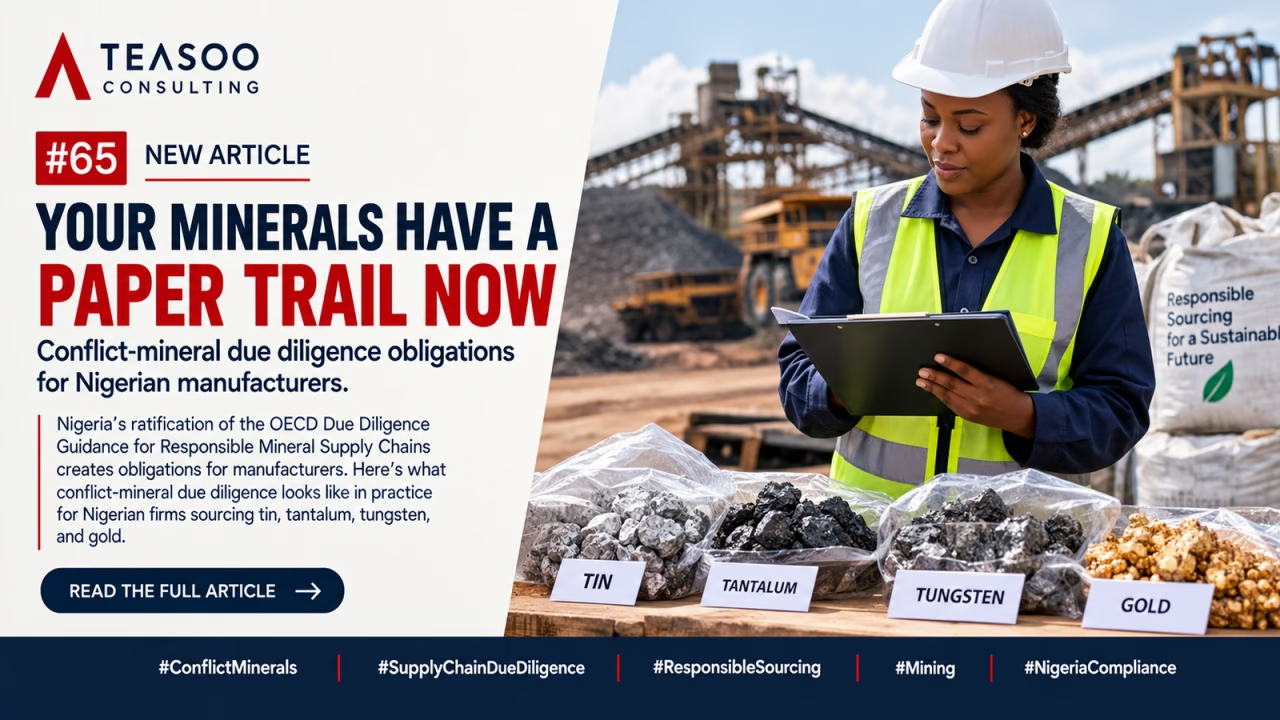
Your Minerals Have a Paper Trail Now
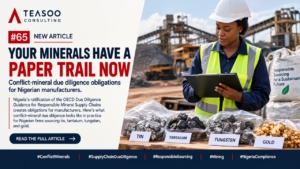
For Nigerian manufacturers, the days of treating minerals simply as another line item in the procurement process are changing. Tin, tantalum, tungsten and gold—commonly referred to as the “3TG” minerals—can carry significant environmental, human-rights, corruption and conflict-related risks depending on where and how they are mined, traded and processed.
The growing international emphasis on responsible mineral sourcing means Nigerian manufacturers that participate in global supply chains are increasingly expected to know where their minerals come from and how they move through the supply chain. The OECD Due Diligence Guidance for Responsible Supply Chains of Minerals from Conflict-Affected and High-Risk Areas provides a globally recognised framework for identifying and addressing these risks. It applies across the mineral supply chain, from extraction through processing and ultimately to manufacturers and end users.
This does not mean that every Nigerian manufacturer is automatically subject to a single new Nigerian “conflict-minerals law.” Rather, responsible sourcing requirements can arise through applicable national regulation, contractual requirements, investor expectations, customer requirements and international market access. For companies supplying multinational customers, these expectations can become commercially significant even where the immediate Nigerian legal requirement is not expressed as a standalone conflict-minerals regulation.
So, what does due diligence look like in practice?
The starting point is management systems. A manufacturer should establish a clear responsible-minerals policy, assign internal responsibility and communicate sourcing expectations to suppliers. Procurement teams should understand that asking only for an invoice or certificate of origin may not be enough where material risks exist. The OECD framework recommends supply-chain controls, transparency mechanisms, supplier engagement and grievance mechanisms.
The second step is knowing the supply chain. Manufacturers should identify suppliers and, where appropriate, trace the minerals back through traders, exporters, smelters or refiners. This is particularly important for 3TG because smelters and refiners are key control points where information about mineral origin and chain of custody can be consolidated or lost.
The third step is risk identification and assessment. Companies should look for indicators such as sourcing from conflict-affected or high-risk areas, unexplained changes in mineral origin, suspicious payment arrangements, corruption risks, serious human-rights abuses, forced labour, child labour or indications that mineral revenues may support armed groups or criminal networks. The OECD approach is risk-based: higher-risk circumstances require more extensive investigation and mitigation.
Where risks are identified, the answer is not necessarily to immediately abandon the supplier or the region. The OECD framework encourages companies to use their leverage to prevent and mitigate adverse impacts, while reserving disengagement for circumstances where risks cannot be adequately addressed or involve particularly severe harm.
Manufacturers should also document what they have done. A defensible due-diligence file could include supplier questionnaires, purchase records, origin information, transport documentation, contracts, certifications, risk assessments, correspondence with suppliers, corrective-action plans and evidence of management review.
This documentation is increasingly important because responsible sourcing is moving from policy statements to demonstrable evidence. The OECD notes that companies ultimately bear responsibility for carrying out due diligence and accounting for how they address actual and potential adverse impacts in their operations, supply chains and business relationships.
For Nigerian businesses, this is also an opportunity. Strong mineral traceability can improve supplier management, strengthen ESG reporting, support access to international markets and demonstrate that Nigerian manufacturing can participate credibly in responsible global value chains. The OECD has specifically highlighted the need for stronger implementation and capacity-building around responsible business conduct and mineral-supply-chain due diligence in West Africa, including Nigeria.
The message for manufacturers is straightforward: your minerals have a paper trail now. Knowing what you purchased is no longer the same as knowing what you are sourcing. Companies that build practical traceability, risk assessment, supplier engagement and documentation systems today will be better positioned to respond to the responsible-sourcing expectations shaping global manufacturing.
#ConflictMinerals #SupplyChainDueDiligence #ResponsibleSourcing #Mining #NigeriaCompliance