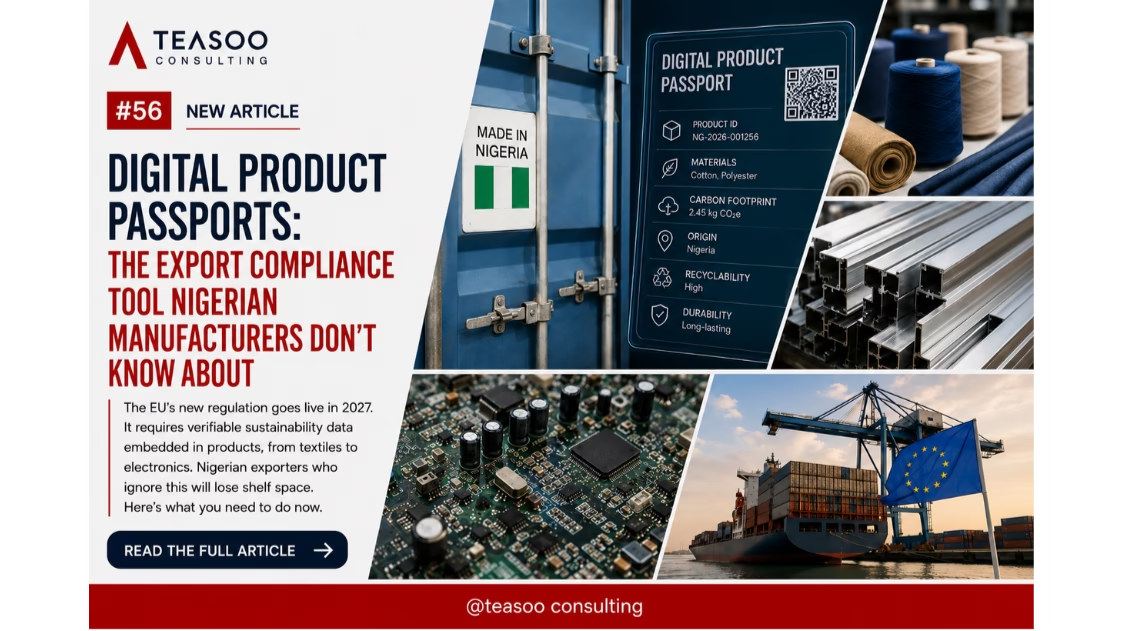
Picture this: A buyer in Germany scans a QR code on your product. In seconds, they can verify its material composition, country of origin, carbon footprint, and end-of-life handling. No emails. No paperwork. Just instant access to the information needed to assess whether your product meets the EU’s sustainability requirements.
For decades, exporting to the European Union meant meeting requirements for quality, safety, and paperwork. Increasingly, it also means proving, digitally and verifiably, how a product was made.
What Is a Digital Product Passport, Really?
Strip away the regulatory language and a Digital Product Passport (DPP) is simple: it’s a digital ID card for a physical product. Instead of a certificate that can be photocopied, forgotten, or faked, the product carries a QR code or similar data carrier that links to a verified record of its own history.
The DPP is the centrepiece of the EU’s Ecodesign for Sustainable Products Regulation (ESPR), Regulation (EU) 2024/1781. Depending on the product category, that digital record can include:
Material composition, down to the fibre or alloy, country of origin, carbon footprint across the product’s life, recycled content, repairability and expected durability, environmental performance, end-of-life handling and recycling instructions
Think of it as the difference between a product telling a customs officer “trust me” and a product being able to prove it. That shift, from claims to verifiable data, is the entire point of the regulation.
This Isn’t a Future Proposal. It’s Already Running.
The European Commission launched the central DPP Registry, the infrastructure the whole system runs on, in July 2026. Battery passports become mandatory on 18 February 2027, the first hard deadline under the regulation. Iron and steel, textiles, tyres, aluminium, and electronics follow through separate delegated acts over the coming years, each with its own timeline.
That staggered rollout matters. It means there is no single date to watch, and no safe assumption that “2027” is far away for every product category. The Commission’s Joint Research Centre has already published the methodology that will decide exactly which data points get required for each category, giving businesses an early preview of what is coming.
Why This Should Matter to You Long Before Any Legal Deadline
Here is the part most manufacturers miss: the real risk isn’t Nigerian customs, and it isn’t EU customs either, at least not first. It’s your buyer.
Under the ESPR, the company placing a product on the EU market carries the compliance responsibility, and the fines for getting it wrong. That means European importers are already starting to ask their suppliers, including you, for sustainability data before any deadline legally requires it, simply because their own legal exposure demands it.
The conversation with your buyer is quietly shifting from “Can you supply this product?” to “Can you prove how this product was made?” Manufacturers who can’t answer that second question convincingly risk losing preferred-supplier status to competitors who can, regardless of how good their product actually is.
The Part Nobody Tells You is “This Can Work in Your Favour”
It’s easy to hear all this as a threat. It doesn’t have to be only that.
The same product data infrastructure you have would build to satisfy a DPP requirement, tracking materials, suppliers, and origin, also strengthens your own inventory management, supplier oversight, and traceability. It’s operational value you keep regardless of what the EU requires next.
There is a regional angle as well. Conversations involving the African Continental Free Trade Area (AfCFTA) Secretariat and GS1 have pointed to digital product data eventually supporting electronic proof of origin within African trade itself, cutting the paperwork burden that already slows down cross-border trade on the continent. Build the data systems for Europe, and you may find they pay off closer to home as well.
For manufacturers already investing in ESG and supply chain transparency, the DPP isn’t a new mountain to climb. It’s the next reason the climb was worth it.
How to Actually Prepare, Starting Now
Waiting for a buyer to ask for DPP data before you have it is the expensive way to do this. A few practical starting points:
Check whether your product category is in scope, and on which timeline. Textiles, aluminium, and tyres are not all moving at the same pace. Start centralising product and supplier data now, even informally. You cannot digitise what you haven’t first written down accurately. Ask your EU customers directly what they’ll expect and when. They’re often further along in thinking about this than their suppliers are. Tighten supplier documentation and traceability across your own value chain, since your passport is only as credible as the data behind it. Be skeptical of anyone offering a shortcut. Verify that any DPP solution or compliance provider aligns with official European Commission guidance and recognised standards, not just a vendor’s own marketing.
The Bigger Picture
The Digital Product Passport marks a real shift in how international trade works. Products will increasingly compete not just on price and quality, but on how transparent and verifiable the story behind them is.
For Nigerian manufacturers, that’s not simply another regulatory hurdle to clear. It’s an early look at where global trade is heading, and a chance to get ahead of competitors who are still treating this as someone else’s problem.
At Teasoo Consulting, we help governments, organisations, manufacturers, and project developers navigate emerging ESG and sustainability requirements through practical, business-focused solutions. From ESG strategy and supply chain due diligence to sustainability reporting, regulatory readiness, and responsible sourcing frameworks, we help clients turn evolving compliance obligations into opportunities for stronger governance, improved market access, and long-term resilience.
The businesses that treat this as a strategic capability, rather than paperwork to deal with later, will be the ones still on the shelf when the deadlines arrive.
TeasooConsulting #YourPartnerForSu#DigitalProductPassport #ESPR #EUCompliance #NigerianExporters #TradeCompliance #SustainableManufacturing #ExportReadiness #MadeInNigeria