You have conducted the environmental impact assessments, secured the regulatory permits, and drafted a flawless stakeholder engagement plan based on global best practices. Yet, the moment your team enters the host community, the project stalls.
Why? Because you brought a corporate template to a complex community.
In Nigeria’s dynamic landscape, standard ‘public consultation’ models imported from Western practice routinely fall flat. Nigeria is home to over 250 ethnic groups, each with its own intricate power dynamics, communication styles, and historical contexts. Securing a genuine “Social License to Operate” (SLO) here is not a box-ticking exercise; it is an exercise in deep cultural competency.
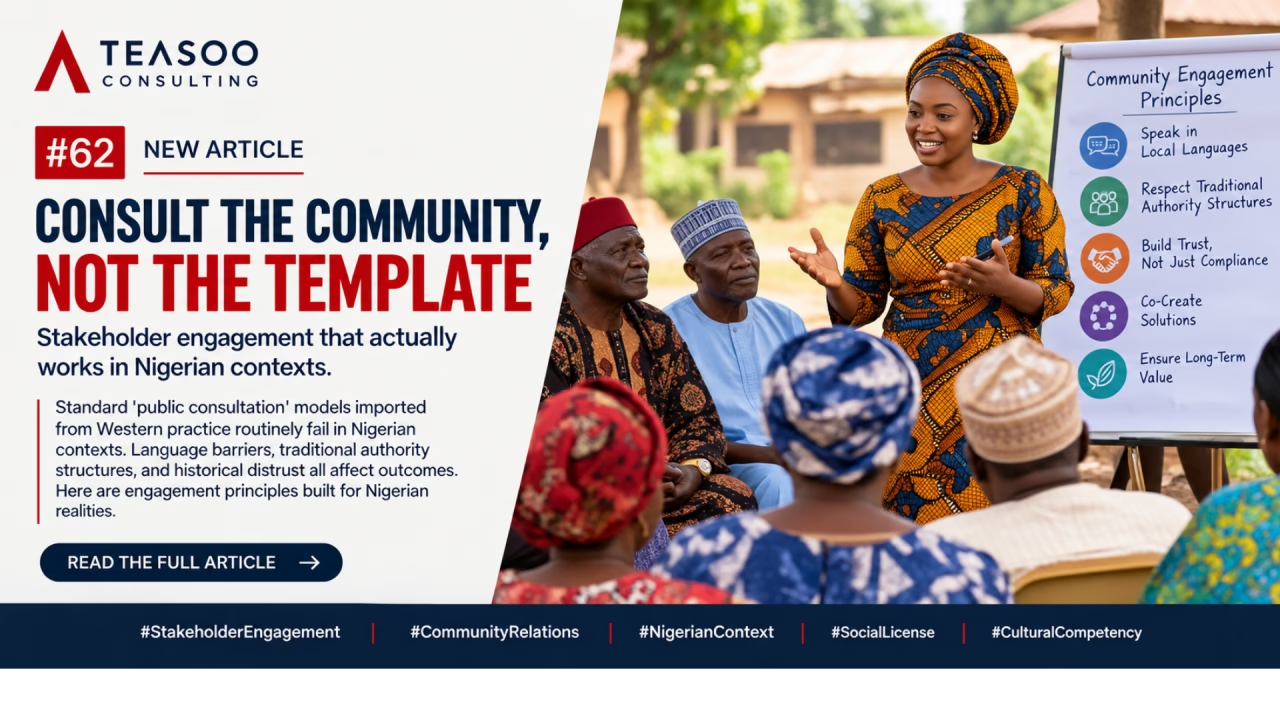
If you want stakeholder engagement that actually works in Nigerian contexts, you must move beyond the template and embrace these localized principles:
1. Honor the Gatekeepers: Traditional Authority Structures
In Western models, public officials are often the primary point of contact. In Nigeria, traditional and political power run parallel. Bypassing a community’s traditional ruler—whether an Emir in the North, an Oba in the West, or an Eze or Amanyanabo in the East and South-South—is a fatal project flaw.
- The Reality: Traditional leaders are the custodians of the land and the people.
- The Strategy: Engagement begins with paying homage. Understand the specific traditional hierarchy of your host community and initiate contact through the proper cultural protocols before holding any general public forums.
2. Speak the Language (Literally and Figuratively)
While English is Nigeria’s official language, trust is rarely built in corporate speak.
- The Reality: Presenting a complex, jargon-heavy PowerPoint to a rural or semi-urban community creates immediate alienation. Furthermore, non-verbal communication—such as the ceremonial presentation of kola nuts or understanding local dress codes—speaks volumes.
- The Strategy: Utilize local Community Liaison Officers (CLOs) who understand both the corporate objective and the local dialect (or Nigerian Pidgin). Translate technical project impacts into relatable, everyday outcomes.
3. Deconstruct the “General” Town Hall
The Western town hall assumes everyone has an equal opportunity to speak at a microphone. In many Nigerian cultures, this approach inadvertently silences key demographics.
- The Reality: Out of respect for hierarchy, youths may not voice dissenting opinions in front of elders. Similarly, women may be marginalized in predominantly male-led community councils.
- The Strategy: Segment your engagement. Host the general town hall to show collective respect, but follow it up with targeted, separate focus groups for women, youth leaders, and elders. This is the only way to capture a truly inclusive picture of community concerns.
4. Navigate Historical Distrust with “Quick Wins”
Especially in resource-rich regions like the Niger Delta, communities suffer from consultation fatigue. They are used to corporate entities making grand, long-term promises that never materialize.
- The Reality: Distrust is the default setting. Communities view corporate engagement through the lens of past abandoned projects and broken agreements.
- The Strategy: Move from transactional promises to transformational partnerships. Instead of only pitching a 5-year development plan, identify and execute a “quick win”—a highly visible, immediately beneficial, and sustainable community project—early in your engagement phase to prove your commitment.
The Bottom Line
Stakeholder engagement in Nigeria is not about managing people; it is about building relationships. It requires patience, empathy, and a willingness to adapt your corporate timeline to local realities.
At Teasoo Consulting, we help businesses translate global ESG and social impact goals into culturally resonant, actionable strategies on the ground. We ensure that your projects don’t just start, but succeed with the full backing of your host communities.
Are your community relations strategies fit for the Nigerian reality? Let’s connect and refine your approach.