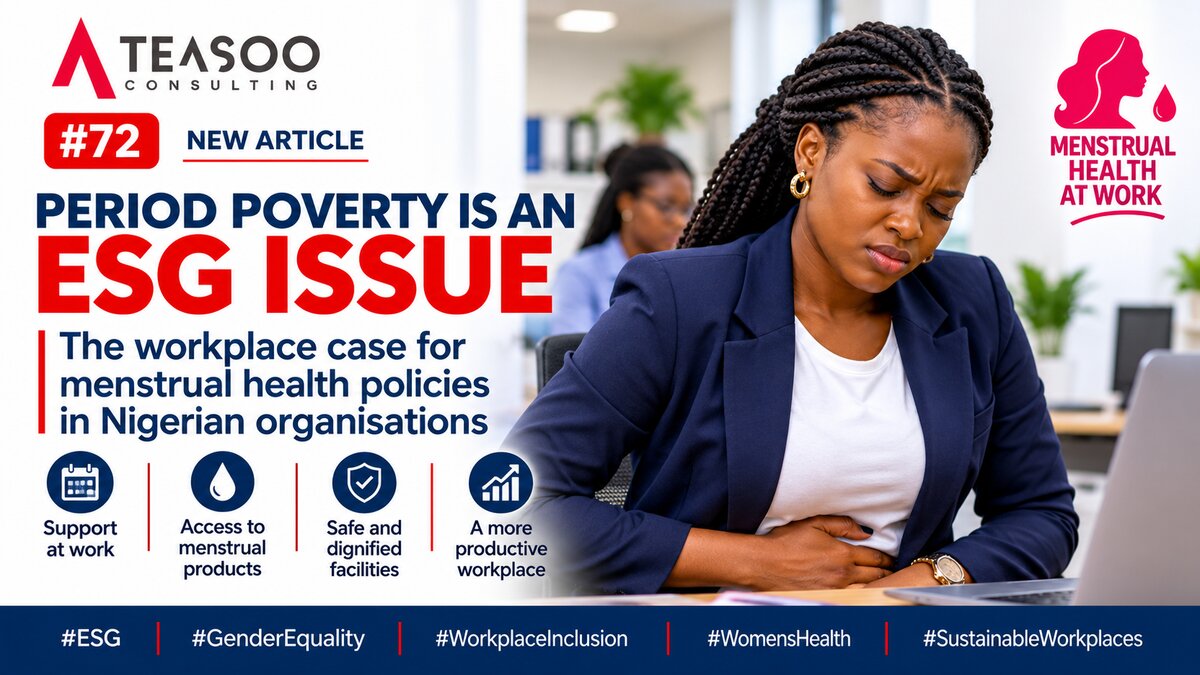
Period Poverty: The Overlooked ESG Issue in Nigerian Workplaces
How Nigerian organisations can treat period poverty as a social sustainability issue, embedding menstrual health policies to build more inclusive, productive workplaces.

How Nigerian organisations can treat period poverty as a social sustainability issue, embedding menstrual health policies to build more inclusive, productive workplaces.
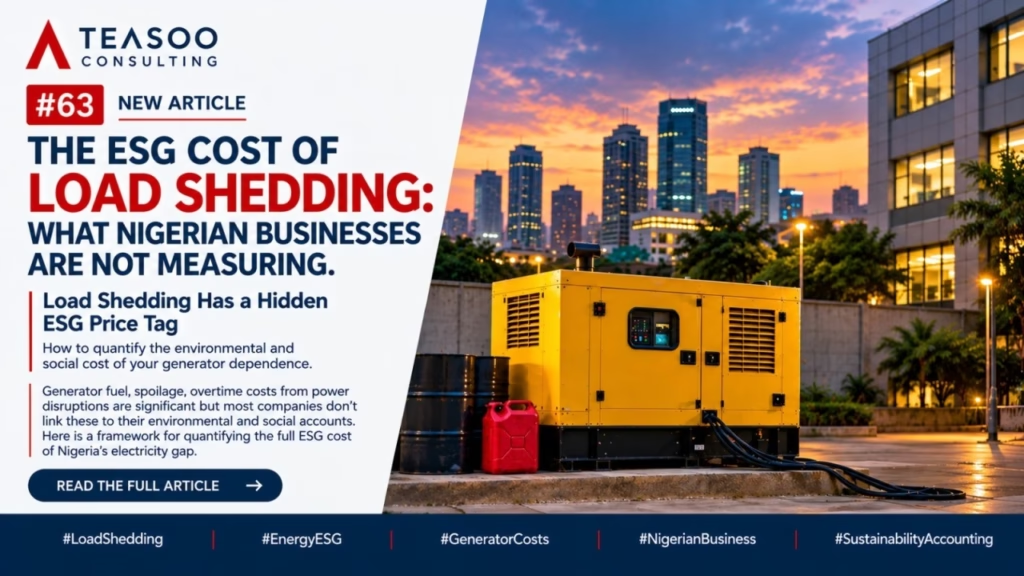
Nigeria’s energy transition is a business transition, affecting costs, competitiveness, ESG, energy reliability, capital access, and inclusion.
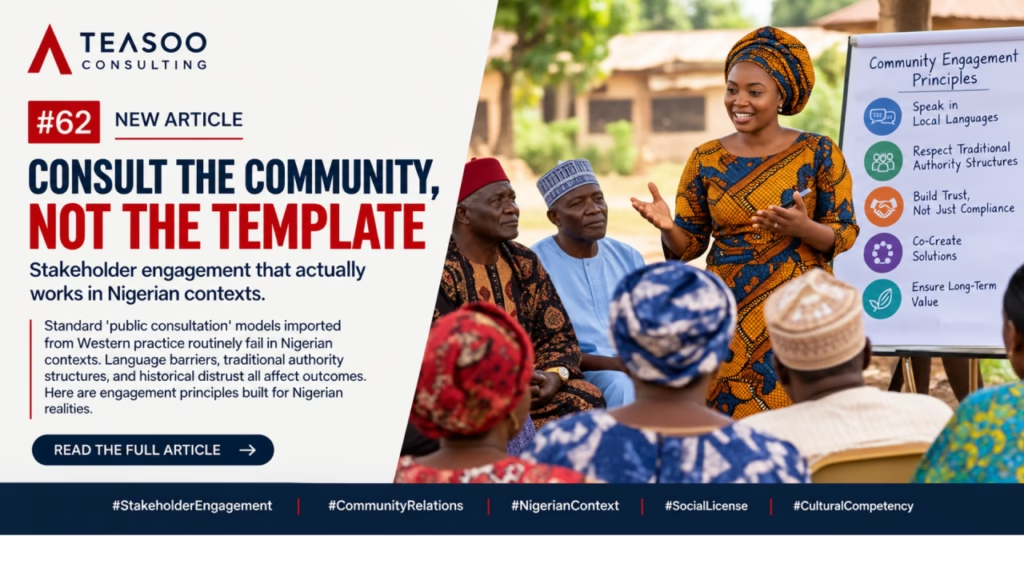
Effective stakeholder engagement in Nigerian communities requires cultural sensitivity, local protocols, inclusive consultation, and trust-building beyond corporate templates.
Gender pay equity is now a core ESG metric. HR leaders must audit pay gaps, modernize salary structures, and link executive incentives to measurable equity goals.
Fair contracts can protect Nigeria’s informal workers, boost small businesses, and strengthen the economy. Here’s why they matter and how to act.