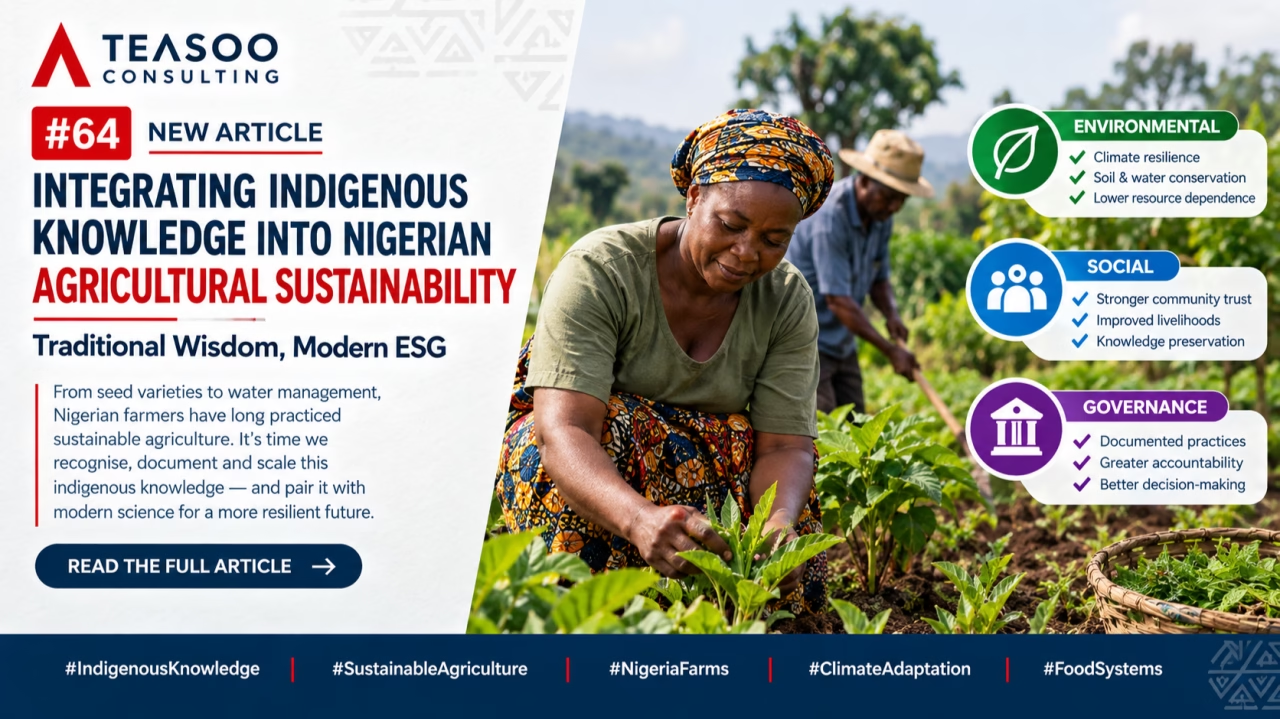
Traditional Wisdom, Modern ESG
Long before “sustainability” became a boardroom word, Nigerian farmers were already practicing many of its principles.
Indigenous seed varieties adapted to local soils and rainfall. Traditional water management practices designed around seasonal conditions. Intercropping and crop rotation methods that supported soil fertility without relying entirely on external inputs.
This knowledge was not guesswork. It was built through generations of observation, experimentation and adaptation to local environmental conditions, long before terms like “climate-smart agriculture” entered the conversation.
The Knowledge Was Already There
Across Nigeria’s farming communities, traditional agricultural systems were shaped by resilience and necessity.
Farmers selected and saved seed varieties suited to their local conditions. Communities developed ways of managing and storing water through dry periods. Crop rotation and intercropping helped maintain soil productivity across seasons.
Much of this knowledge was never documented in a sustainability report or formal agricultural framework. It was passed from one generation to another through practice, observation and community knowledge.
That does not make it less valuable.
What Modern Agriculture Can Learn
Research increasingly shows that locally adapted agricultural practices can offer important lessons for climate resilience.
Some traditional crop varieties, for example, have characteristics that make them well suited to the environmental conditions in which they have been cultivated over generations. Similarly, traditional approaches to water management and soil conservation can provide useful starting points for adapting agricultural systems to changing climate conditions.
The opportunity is not to position indigenous knowledge against modern science.
It is to bring the two together.
Scientific research can help test, improve and scale practices that communities have refined over generations. At the same time, indigenous knowledge can provide context that purely technical approaches may overlook.
Why This Matters for ESG
For Nigerian agribusinesses building credible ESG strategies, indigenous knowledge should not be treated as a nostalgic add-on. It can be a practical part of sustainability planning across all three pillars.
🌱 Environmental Locally adapted crops and traditional approaches to soil and water management can contribute to climate resilience and potentially reduce dependence on resource-intensive interventions.
🤝 Social Working with farming communities as knowledge holders, rather than treating them only as beneficiaries or recipients of training, can strengthen trust, support livelihoods and help preserve knowledge across generations.
📊 Governance Documenting indigenous practices and establishing appropriate processes for their use can improve accountability and help businesses integrate local knowledge into agricultural planning, monitoring and decision-making.
What Blending Both Looks Like in Practice
The strongest path forward is not choosing between tradition and innovation. It is creating systems where both inform each other.
That could mean agronomists working with community farmers and elders to identify locally adapted seed varieties that could be tested and scaled.
It could mean incorporating traditional water management approaches into modern irrigation and climate adaptation planning where they are technically appropriate.
It could mean designing extension programmes that recognise farmers as knowledge holders, while also giving them access to modern research, technology and improved agricultural practices.
The goal is not to romanticise traditional practices or assume that every indigenous method is automatically sustainable.
The goal is to understand what works, test it, protect the knowledge behind it and determine where it can complement modern agricultural science.
The Opportunity Ahead
Nigerian agribusinesses have an opportunity to look closer to home for some of the knowledge needed to build more resilient food systems.
The climate-appropriate practices that companies are now exploring through research, pilots and adaptation programmes may already exist, in part, within the communities where they operate.
The opportunity is not to reinvent sustainable agriculture.
It is to recognise, document, validate and responsibly scale what communities already know, while pairing that knowledge with the tools, research and technology modern agribusiness can provide.
What indigenous agricultural practices have you seen make a real difference on the ground? I’d love to hear from those working directly with farming communities.
At Teasoo Consulting, we work with businesses and development partners across Nigeria to build ESG strategies grounded in local realities, not just global frameworks. If this is a conversation your organisation is having, we’d welcome the chance to talk.
#IndigenousKnowledge #SustainableAgriculture #NigeriaFarms #ClimateAdaptation #FoodSystems #TeasooConsulting #YourPartnerForSuccess